
Multi-location stock management system
One system to track stock levels, suppliers and purchase orders across 20+ warehouses, with barcode scanning, automatic reorder points and reporting.
- Industry
- Inventory and warehousing
- Services
- Web platform, mobile barcode app, analytics
- Stack
- React, Node.js, MongoDB, Redis
- Timeline
- 4 months
The problem
The client ran separate inventory systems in each warehouse. Stock counts disagreed, orders were delayed and resources went to the wrong places. Tracking was manual and slow, and with no live view of stock it was impossible to set sensible stock levels.
Barcode integration was unreliable, reports differed from one location to the next, and existing systems slowed down under high transaction volumes. Supplier management and purchase orders were mostly handled by hand, which added delays and led to stockouts.
How we approached it
We built a central inventory platform that syncs every warehouse in real time using WebSocket connections and Redis caching, so stock levels, movements and status are visible in one place.
A mobile barcode app keeps data capture accurate on the warehouse floor. Purchase orders are generated automatically from reorder points, and supplier records live in the same system. Database tuning and caching keep it fast at high volumes, and demand forecasting helps prevent both stockouts and overstock.
What we built
Real-time tracking
Live stock updates across every location.
Barcode scanning
Fast, accurate stock updates from a mobile scanning app.
Multi-location support
Inventory for 20+ warehouses managed from one system.
Analytics and reports
Stock, movement and cost reports with demand forecasting.
Automatic reorder points
Purchase orders raised when stock falls below set levels.
Supplier management
Suppliers and purchase orders tracked alongside inventory.
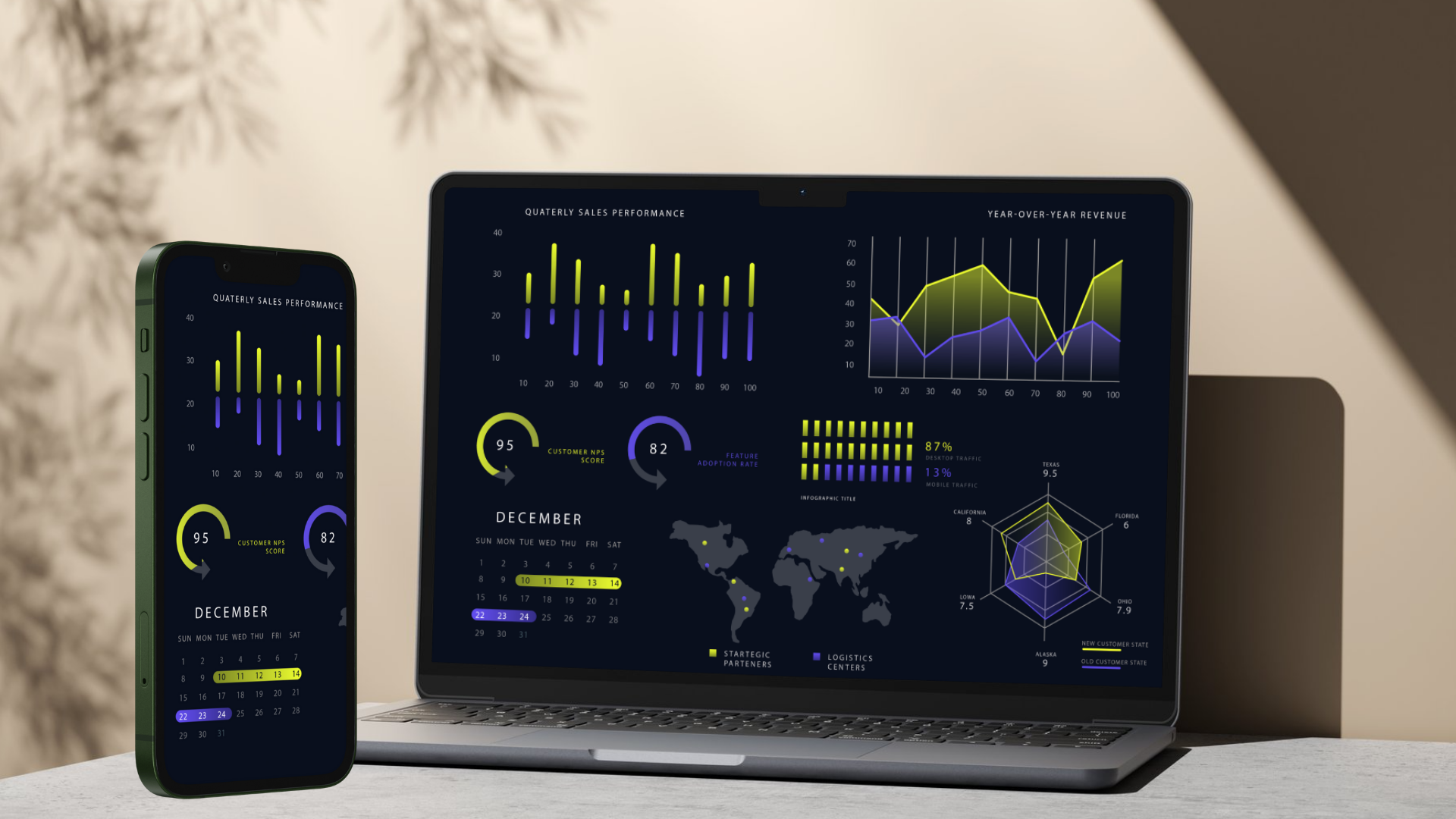
The product
Tech stack
- React
- Node.js
- MongoDB
- Barcode API
- Express.js
- Redis
- WebSocket
- Docker
- AWS
- Mobile App
- REST APIs
- Analytics
How the project ran
- 011 week
Requirements and planning
Business analysis, feature planning and system design.
- 022 months
Backend development
APIs, database design and inventory logic.
- 031 month
Frontend development
Dashboard, barcode integration and mobile app.
- 042 weeks
Integration and testing
System integration, barcode testing and performance tuning.
- 051 week
Deployment and training
Production deployment and user training.
Results
Inventory accuracy reached 99% across more than 20 warehouses, all syncing in real time. Inventory efficiency improved by 50% through automated tracking.
Stockouts fell by 40% thanks to forecasting, 70% of inventory tasks are now automated, and overall inventory costs dropped by 25% through better stock levels and lower carrying costs.
- 99% inventory accuracy
- 40% fewer stockouts
- 70% of inventory tasks automated
- 25% lower inventory costs
Questions about this project
Ask us something elseWhat is a stock management system?
It is a stock management system that tracks inventory levels, manages suppliers, handles purchase orders and reports on stock. It includes barcode scanning, automatic reorder points and support for multiple locations.
What did this project achieve?
Inventory accuracy reached 99% across all locations, inventory efficiency improved by 50%, and the system now manages more than 20 warehouses.
What challenges did you face during development and deployment of this project?
The main challenges were syncing inventory in real time across locations, getting reliable barcode scanning, and tracking suppliers and purchase orders.
How did you deal with the challenges during development and deployment?
We built a real-time sync system using WebSocket and Redis, integrated a barcode scanning API with mobile support, and automated purchase order generation.
What was the development and deployment timeline of this project?
The project ran in 5 phases: requirements and planning, backend development, frontend development, integration and testing, and deployment and training. It took about 4 months from planning to production.
Losing track of stock across locations?
Tell us how you manage inventory today. We will suggest a system that fits your warehouses and the way your team works.