
Real-time fire and weapon detection from camera feeds
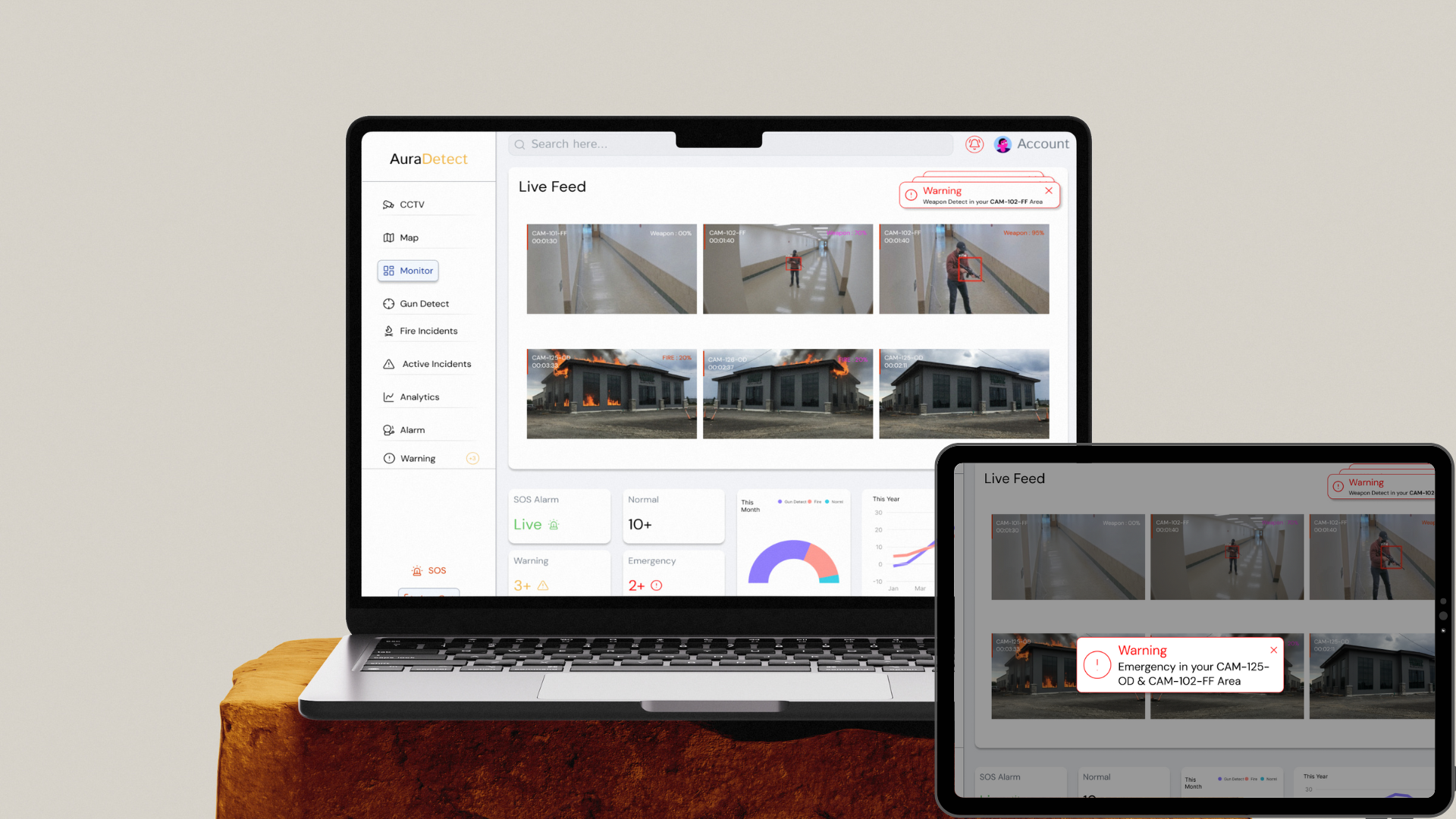
A computer vision system that watches multiple camera feeds, detects fire and firearms in under 2 seconds and sends alerts to security teams and existing security systems.
- Industry
- Security
- Services
- Computer vision models, video pipeline, alerting
- Stack
- TensorFlow, OpenCV, Python, React, Node.js
- Timeline
- 4 months
The problem
Security depended on people watching screens, and people get tired, miss things and respond late. Motion-based detection produced so many false alarms that staff learned to ignore them, which made real threats harder to spot.
Processing several video streams at once strained the existing infrastructure, and changes in lighting and environment lowered detection accuracy. Every critical decision rested on human judgment alone.
How we approached it
We trained deep learning models to recognise firearms and fire in live video. Processing runs at the edge, close to the cameras, which keeps detection under 2 seconds, protects privacy and reduces bandwidth.
Multi-stage validation filters out false positives, and the models are tuned for different lighting and environments. GPU acceleration lets the system handle many streams at once across large sites. Standard APIs connect it to the client's existing security systems, so it works alongside the measures already in place.
What we built
Real-time detection
Threats detected and alerts sent in under 2 seconds.
High accuracy
96% detection accuracy with fewer than 2% false positives.
Multi-camera support
Many video feeds monitored at the same time.
24/7 monitoring
Continuous automated detection without breaks.
Low-light handling
Models tuned for varied lighting and environmental conditions.
Security system integration
Alerts passed to existing security infrastructure for automated response.
The product
Tech stack
- Computer Vision
- TensorFlow
- Python
- OpenCV
- Deep Learning
- React
- Node.js
- PostgreSQL
- Docker
- GPU Computing
- Video Processing
- AWS
How the project ran
- 012 weeks
Research and dataset collection
Collecting threat images and video, preparing the dataset and model research.
- 021.5 months
Model development
Deep learning model training, validation and tuning.
- 031 month
System integration
Camera integration, video processing pipeline and alerting.
- 042 weeks
Testing and calibration
Field testing, accuracy calibration and false positive reduction.
- 052 weeks
Deployment
Production deployment and security system integration.
Results
The system detects both fire and weapons with 96% accuracy and alerts in under 2 seconds. False positives are below 2%, so security staff can trust the alerts they receive.
Monitoring runs around the clock, the system works alongside the existing security setup, and emergency response times improved by 40%.
- 96% detection accuracy
- Alerts in under 2 seconds
- Fewer than 2% false positives
- 40% faster emergency response
Questions about this project
Ask us something elseWhat is real-time fire and weapon detection?
It is a security system that uses deep learning and computer vision to detect fire and firearms in real time. It processes video from multiple cameras, sends alerts immediately and connects to existing security systems for automated responses.
What did this project achieve?
The system detects fire and weapons with 96% accuracy, keeps false positives below 2%, and improved emergency response times by 40%.
What challenges did you face during development and deployment of this project?
The main challenges were the high accuracy a security application needs, keeping false alarms low, and detecting reliably in low light.
How did you deal with the challenges during development and deployment?
We trained deep learning models on large threat datasets, added multi-stage validation to cut false alarms, and tuned detection for different lighting conditions.
What was the development and deployment timeline of this project?
The project ran in 5 phases: research and dataset collection, model development, system integration, testing and calibration, and deployment. It took about 4 months from planning to production.
Need detection on your existing cameras?
Tell us about your site and camera setup. We will explain what can be detected reliably and how we would build it.